About Día de los Muertos
Día de los Muertos braids together pre-Hispanic Aztec and Mexica veneration of the dead with the Catholic All Saints' (1 November) and All Souls' Day (2 November) brought by Spanish missionaries. The result is unlike any other death-remembrance tradition in the world: not sombre but joyful, not private but communal, not afraid but openly affectionate. The dead are not gone — they are guests, expected back once a year and welcomed with their favourite food, drink and music.
For a deeper historical treatment, see Day of the Dead — Wikipedia.
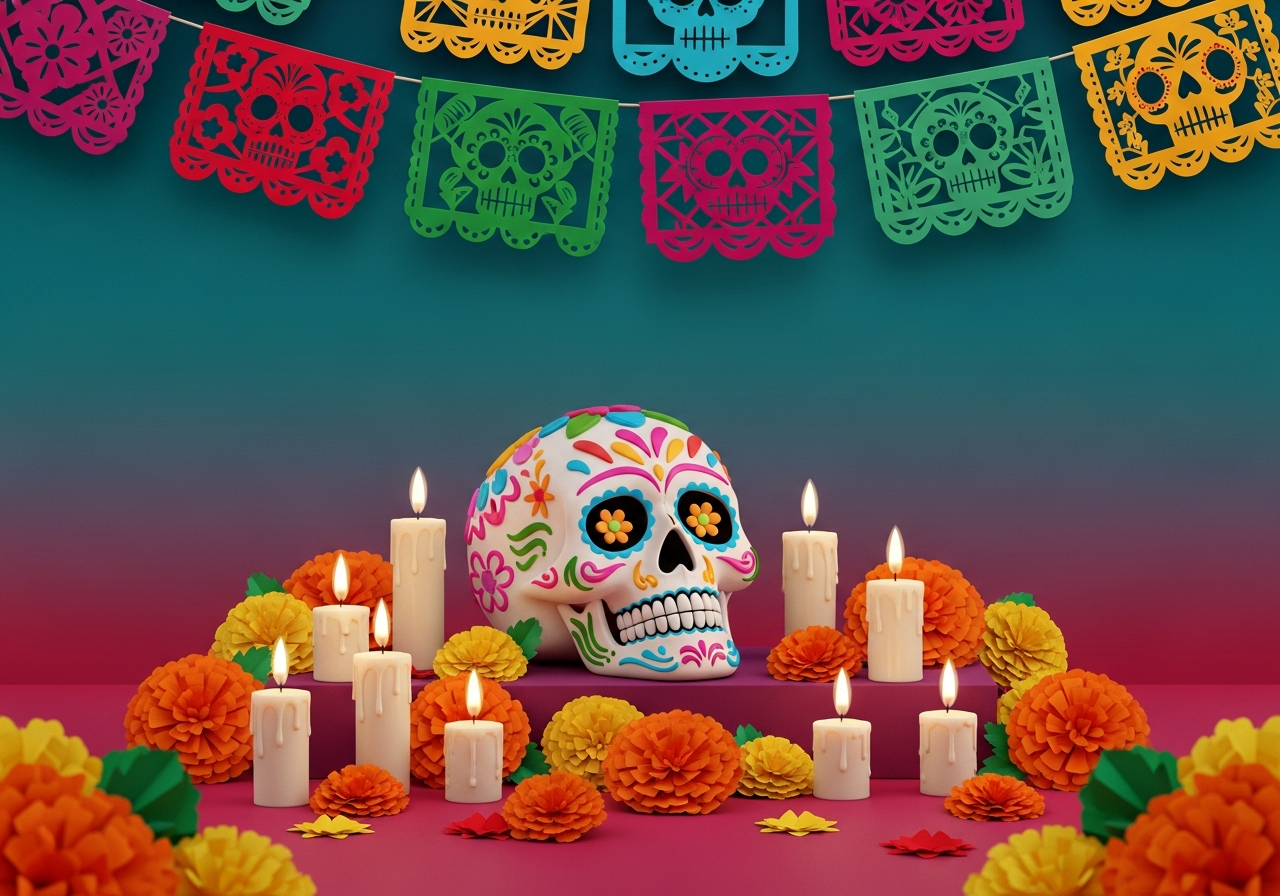
The household altar (ofrenda) is the festival's beating heart: a tiered table laid with photographs of the deceased, marigolds (cempasúchil) whose strong scent is said to guide souls home, candles, salt and water for the journey, pan de muerto (a sweet round bread), sugar skulls bearing the names of the dead, and a glass of whatever the person used to drink. Families spend the night of 1–2 November at the cemetery, cleaning headstones and eating with the dead. UNESCO inscribed the festival on the Intangible Heritage list in 2008.
Traditional greetings
The phrases below are the ones most often used to mark Día de los Muertos in person, by phone, and on cards. The native-script column shows the greeting as a recipient would read it; the transliteration is for those who would like to say it aloud; the English column is a literal rather than a poetic translation.
| Language | Greeting | Transliteration | English |
|---|---|---|---|
| Spanish | Feliz Día de los Muertos | Happy Day of the Dead | |
| Spanish | En memoria de los nuestros | In memory of our own | |
| Nahuatl | Mihcaihuitl | Festival of the Dead |
Design tips for printable Día de los Muertos cards
Hand-printed cards for Día de los Muertos reward restraint and specific reference. The notes below distil what the most thoughtful cards in the tradition tend to do — and what the most commercial ones tend to get wrong.
- Sugar-skull (calavera) iconography is the most recognised Día de los Muertos motif worldwide — render it with the floral inlays of the cempasúchil rather than the plain Western "sugar skull" cliché.
- Marigold orange and cempasúchil yellow against deep teal and aubergine purple is the festival's signature contrast.
- Papel picado (cut-paper banners) along the spine of the card or as a folded insert — a real piece of papel picado is achievable on a laser cutter.
- For ofrenda-themed cards, leave a small framed space for the recipient to add a photograph.
- Avoid Halloween crossover imagery — bats, witches and pumpkins are not part of this festival.
A starting palette:
Five verses for Día de los Muertos cards
Each verse below is short enough to copy onto a folded card by hand. They progress from formal to intimate; pick the one that best fits the relationship and the year you are writing into.
- On the night the marigolds are spread, may the people you most miss find their way home — and stay long enough to eat.
- Feliz Día de los Muertos. For those whose photographs sit on our ofrenda, and for the ones still to be added.
- Pan de muerto on the table, sugar on the headstone, cempasúchil from the door to the grave — the dead know we are still here.
- May this Day of the Dead be the good kind of grief — the kind that laughs, eats, and stays up late.
- En memoria de los nuestros — in memory of our own. Wherever you are missing someone tonight, you are not missing them alone.
Related cultural holidays
Other holidays observed in the Latin America family of traditions: